
Honeybees and green gardens in the heart of the Arabian Peninsula
In the UAE, summer heat reaches 50 °C and barely eases at night. Data from our partner apiaries, recent research and four great Emirati honeys show how honeybees survive at the edge of their biology, and what one colony tells us about the landscape around it.
In the green spaces of the United Arab Emirates, a single flowering shrub can host several bee species at once. Surprisingly, one of them is the honeybee (Apis mellifera), the world's most famous bee. Next to it is something that looks like the same insect shrunk to two-thirds its size: the dwarf honeybee (Apis florea), a wild species that rarely prefers human-made hives. Then, loud and glossy black, a carpenter bee (Xylocopa sp.), nearly twice as long as either of them, the insect most people would call a bumblebee, although no wild bumblebees live here at all; they appear only in closed greenhouses.
Honeybees in the Emirates live at the very edge of their biology. Extreme heat and a long season without forage are constant challenges, yet season after season, they find a way to survive. The people who keep them work in a climate that forgives no mistakes. Their honey is as much a part of their culture as it is a food. And because honeybees share their flowers with a whole community of wild pollinators, the condition of a single colony says far more about the surrounding landscape than most people would guess.
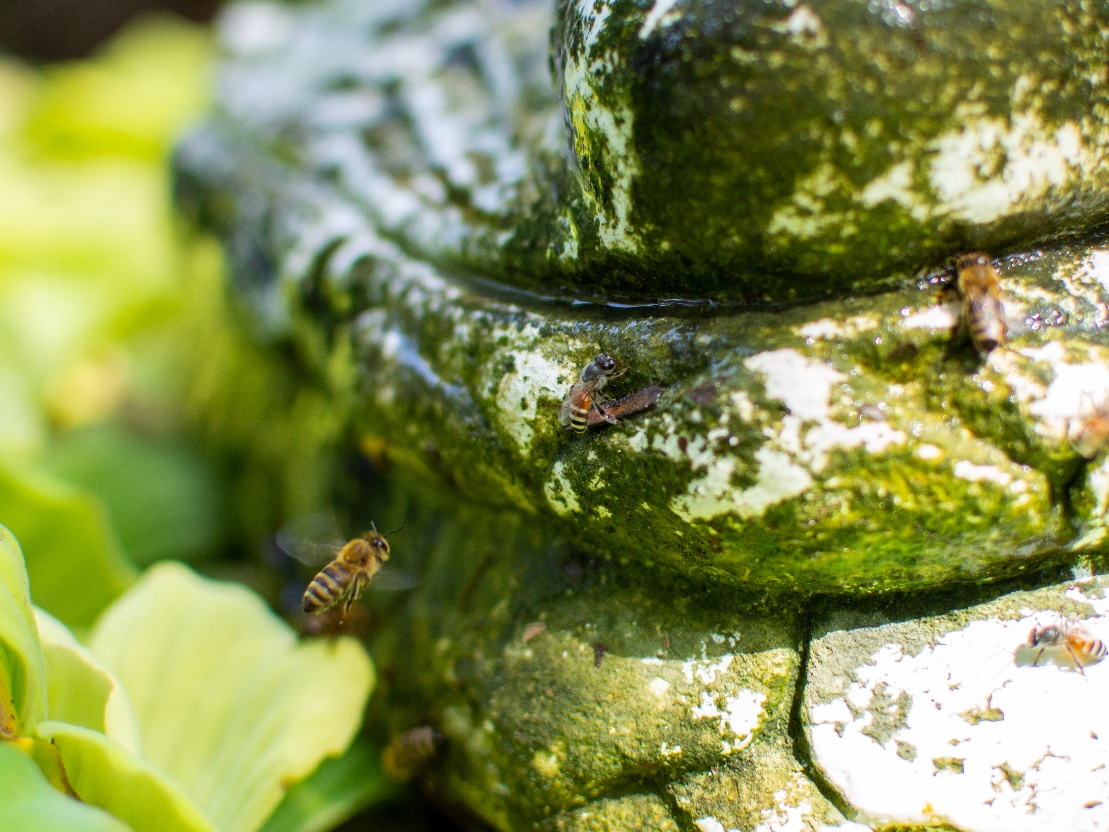
Honeybees (Apis mellifera) and dwarf honeybees (Apis florea) collecting water at a garden fountain in Dubai. In the Emirati summer, water is as vital to a colony as nectar.
A hive that never cools down
The number everyone quotes for the UAE is the daytime peak: up to 50 °C in summer (Beekeepers Foundation UAE, n.d.). Less known is that the heat barely eases at night; in our apiaries the temperature stays above 30 °C (Apisense data, 2026), so a hive has almost no chance to cool down. Yet honeybees have the tools to fight back.
A honeybee colony, often described as a superorganism, has its own thermostat. Brood develops properly only within a narrow band of 34-36 °C. Recent work in the Journal of Experimental Biology found that when pupae are held at a constant 37 °C, only 40% survive, and at 38 °C none do (Harrison et al., 2026). The colony fights to stay below that line with every tool it has fanning, carrying water, spreading out and, surprisingly, using its own stores. The same study calculated that 76% of a colony's ability to buffer heat comes from the sheer mass of honey and wax in the hive, while evaporative cooling contributes only 3%. A colony whose honey has just been taken loses not only its food but also its air conditioning.
Our VitalSensors show how close to the edge this is. Between 22 August and 4 September, more than a quarter of the hives in our partner apiaries (28%) recorded internal temperatures above 38 °C on every single day, and another third crossed the line on some days. The rest better shaded or stronger - never crossed it at all.
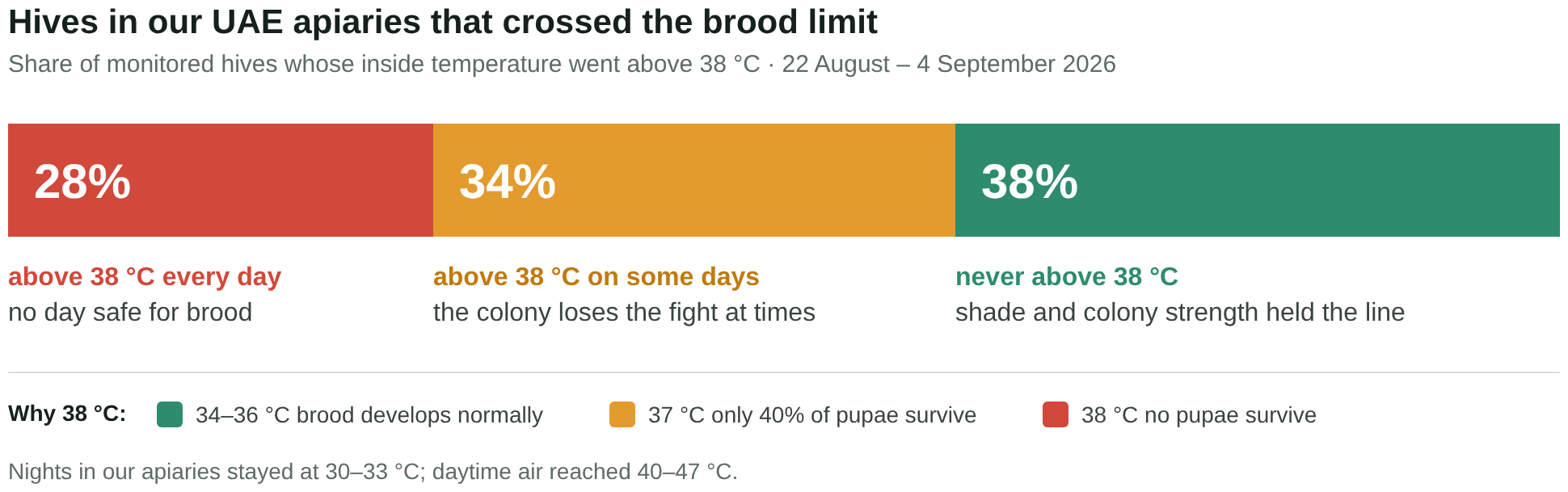
Share of hives in Apisense partner apiaries in the UAE whose inside temperature exceeded 38 °C between 22 August and 4 September 2026. VitalSensor readings are taken at the device's mounting position, which is not necessarily the center of the brood nest. Brood thresholds: Harrison et al. 2026. Source: Apisense data.
The local bee copes better than any import. Apis mellifera jemenitica, the native honeybee of the Arabian Peninsula, is smaller and darker than European bees, keeps heat-shock proteins at permanently high levels, and cuts back brood rearing when the summer bites (Alattal, 2024). In a study from south-western Saudi Arabia, it lost 46% of its colonies over one summer, against 84% for Italian and 92% for Carniolan bees (Nichols et al., 2024). Results like these have encouraged efforts in the UAE to breed lines better suited to the local climate, most of them led by the government through the Abu Dhabi Agriculture and Food Safety Authority (ADAFSA) (Abu Dhabi Media Office, 2026).
With our system, we aim to support these initiatives by adding another layer of information from the very inside of the hive - without lifting the lid and disturbing its delicate microclimate when there is no need.
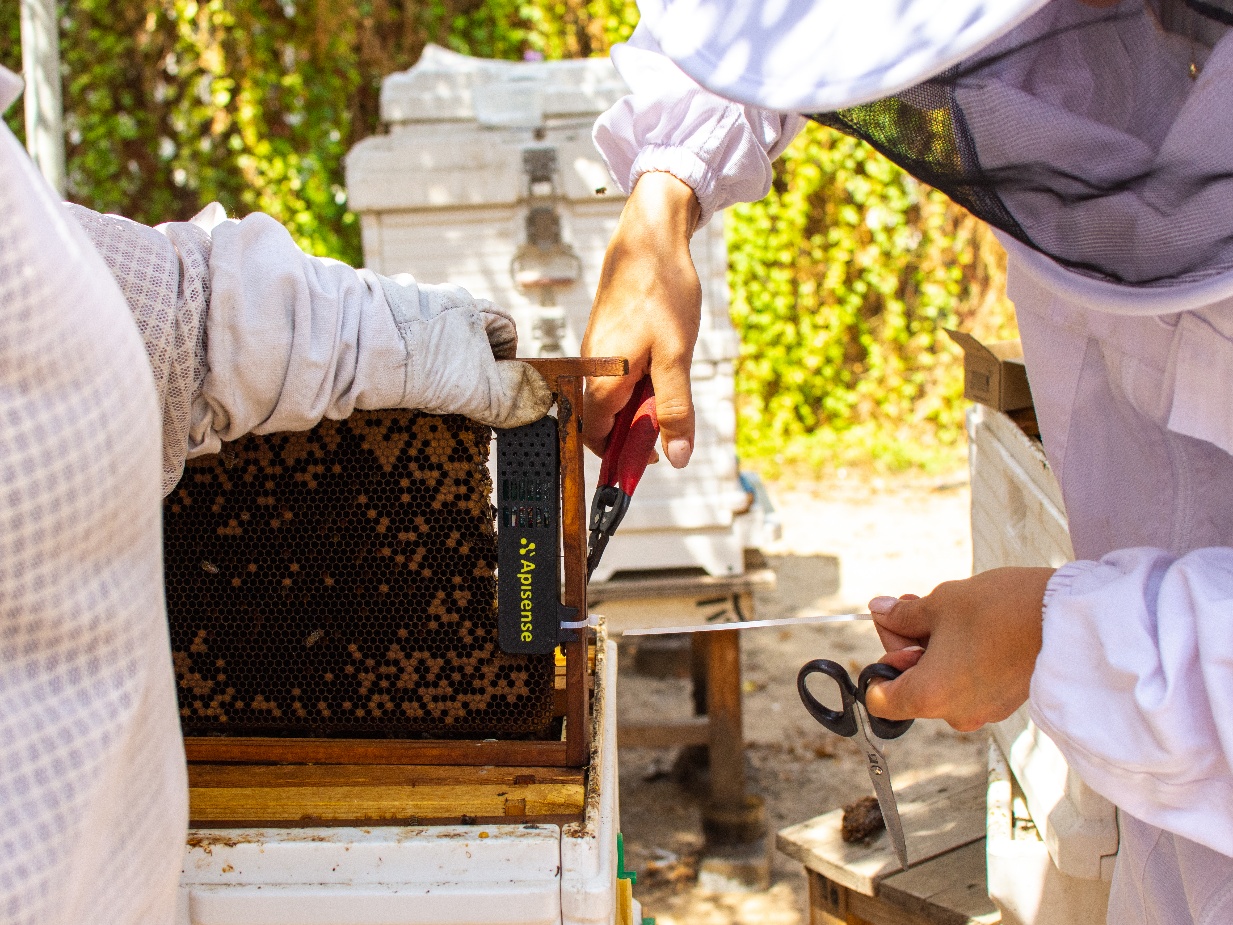
Fitting an Apisense VitalSensor to a brood frame. Once in place, it reports conditions in the heart of the nest without opening the hive.
The flowering windows, what we call the beekeeping season, are short and separated by a long, hot summer that plays the role winter does in Europe: little food for the bees. For the colonies, the only goal in this part of the year is to survive until flowering begins again. Our system shows the same picture: through the summer the readings record a constant struggle with the heat and, in some hives, rising varroa infestation, while the stores fall day by day. We combine the data into a system called Biological Intelligence to help the beekeeper make the right decisions.
The people who keep them
Beekeeping in this part of the world is far older than one might assume. People have gathered honey in southern Arabia for well over 2,000 years, Greek and Roman writers already listed the region's honey and wax among its riches (Whitcombe, 1984), and in the Emirates the craft of tracking wild colonies through the mountains is still practiced today (Fadel, 2026). For generations, families have followed the flowering of wild trees across the country, harvesting honey from the mountains, oases, and coast and passing the knowledge from parents to children. Much of what they know, where a tree will flower after a wet winter, which wadi still holds water in May - has never been written down.
Hard work and a harsh environment
Beekeeping in such conditions requires a different attitude. Inspections start at dawn because by mid-morning the air is too hot to open the hive safely, for the bees and the beekeeper in a full suit. Through the summer, colonies need shade, daily water, and often feeding, since the landscape offers almost nothing for four months (Beekeepers Foundation UAE). Many beekeepers must move their hives into the Hajar mountains or under dense tree canopies to protect them from extreme temperatures.
The reward comes when the heat finally breaks. In October and November, the Sidr trees flower, and the region's most valuable harvest begins: premium Sidr honey, containing over 80% Sidr tree nectar. Much of it comes from rugged, remote wadis, and some are only reachable on foot. The Sidr flow lasts only a few weeks; a missed window means losing the most valuable harvest of the year. To address this, we created Honey Intelligence, a tool that goes beyond simple measurements. It tells the beekeeper when the flow starts, how much honey is being collected, and when the nectar flow ends. After that it follows how much water the bees are still evaporating; when that drops back to baseline, the honey is likely ripe and it is time to check the capping.
That anyone still produces world-class honey under these conditions says a great deal about the skill and patience of Emirati beekeepers. Their work is why this region's honey is known far beyond it.
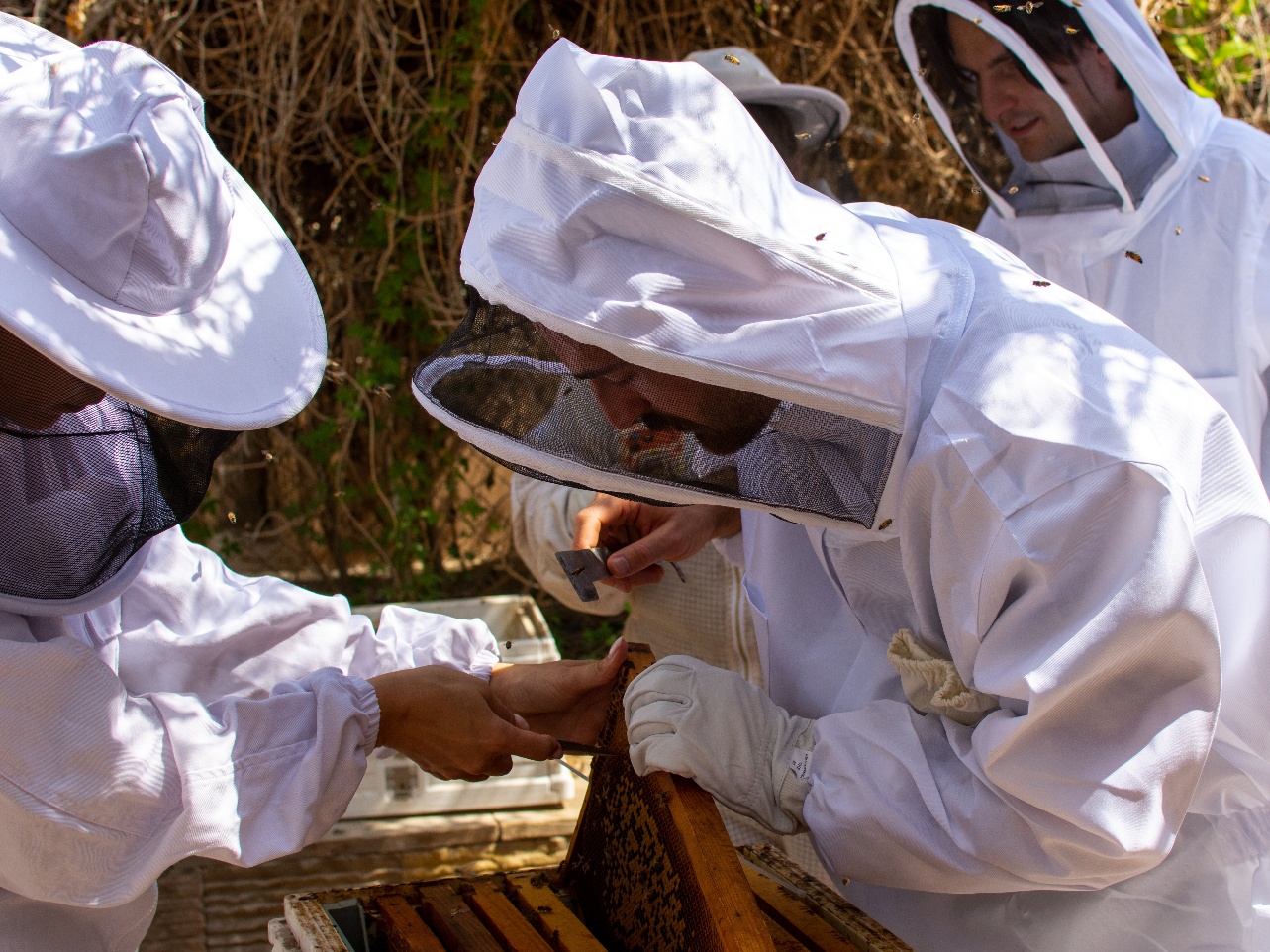
Inspecting a frame of local honeybees at one of our partner apiaries.
It is getting too hot for bees. And when there are not enough trees for them to pollinate, we don't get enough honey. Reda Wafi, beekeeper, quoted in The National, 2023
Sidr, Samar, Ghaf and the sea: honey as heritage
This knowledge lives on in four honeys that carry the country's reputation, each tied to its own landscape and season. Sidr is the Gulf's most prized honey. It comes from the Christ's thorn jujube (Ziziphus spina-christi), which grows wild in the wadis of the Hajar mountains of Ras Al Khaimah, Fujairah and Hatta and is planted along streets and in parks across the cities, and it flowers in October and November (Mokhtar et al., 2025; Al Etihad, 2025). Samar, from the umbrella acacia (Vachellia tortilis), is a dark, strong spring honey of the desert and mountain slopes. Ghaf, from the national tree Prosopis cineraria around the Al Ain oasis and the inland farms, is the last flow before the heat (Fujairah Research Centre, n.d.). And mangrove honey, or sea honey, comes from the grey mangrove (Avicennia marina) along the coasts of Abu Dhabi and the northern emirates, which flowers from April to July. As the climate shifts, these flowering seasons are moving, and our partner beekeepers see it in their own apiaries. Our satellite data feeds the Honey Intelligence system and helps beekeepers track what's blooming around their hives season by season, rather than relying on guesswork.
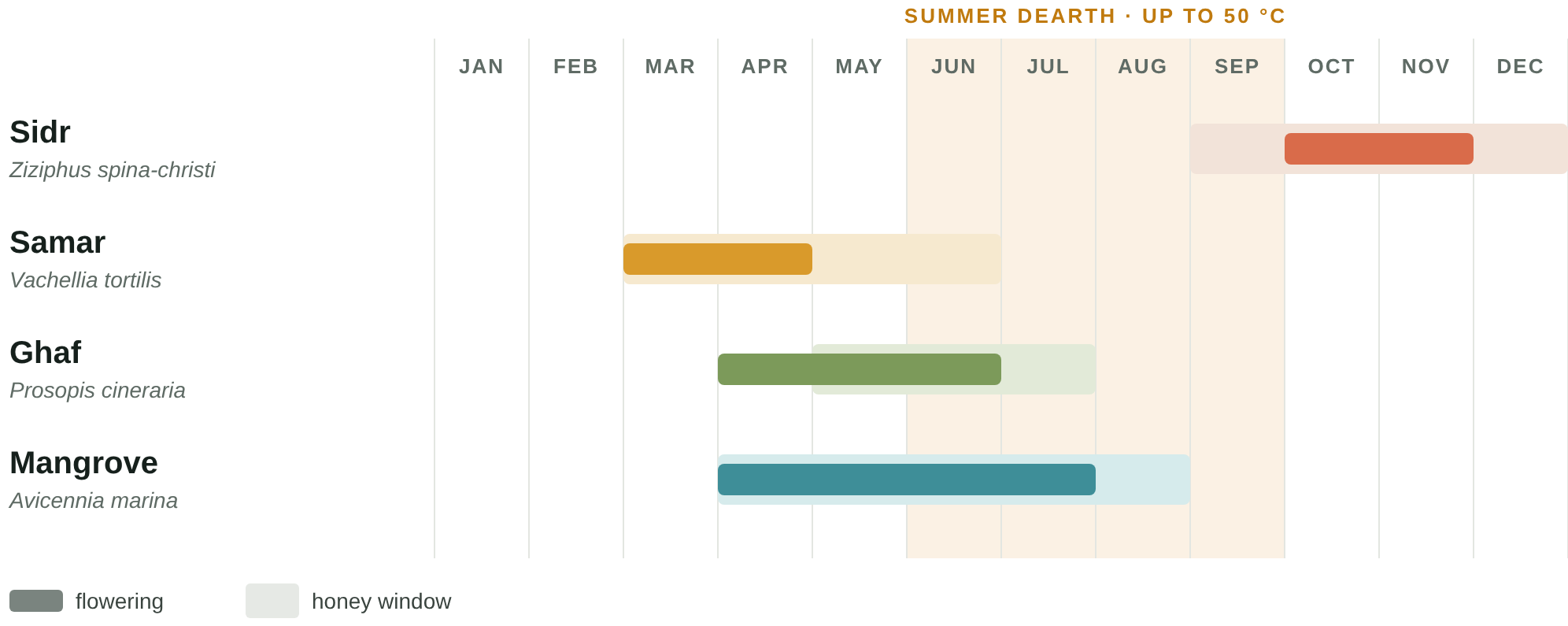
When the four great Emirati honeys are made: Sidr in autumn, Samar in spring, Ghaf and mangrove from spring into the start of the heat. Darker bars show flowering, lighter bands the honey window. The shaded band marks the June-September dearth, when almost nothing flowers. Apisense compiled this from MDPI Foods 2025, Al Ittihad, National Geographic Arabia, the Fujairah Research Centre, producers' information, and Apisense satellite data.
Those types of honey are more than food. Sidr and Samar have long been used in Arabian traditional medicine for wounds, coughs, and restoring strength, and recent laboratory studies of Emirati honeys support this with high antioxidant levels and antibacterial activity (Mokhtar et al., 2025). Their quality is now recognized abroad too: at the 2026 Paris International Honey Awards, UAE beekeepers won 29 awards for 29 entries (WAM, 2026). The world is catching up with what the region has known for a very long time.
Three bees, one flower
Which brings us back to the flowering shrub from the beginning. The three bees we saw on it are not competing so much as sharing the work. The honeybee is the generalist: it visits almost everything in bloom and works in large numbers. The dwarf honeybee keeps to shaded bushes and trees close to the ground, including ghaf and mangroves. The carpenter bee copes best with the heat and keeps flying during the hottest hours, when honeybees slow down (Chappell, 1982).
Together they cover more plants, more places and more hours of the day than any one of them could alone. That is biodiversity in practice: many species do slightly different jobs, so plants get pollinated even when one of the bees has a hard time. Honeybees do not replace wild pollinators; they complement them (Hung et al., 2018), and a healthy honeybee colony is often a good sign that the others around it are doing well too.
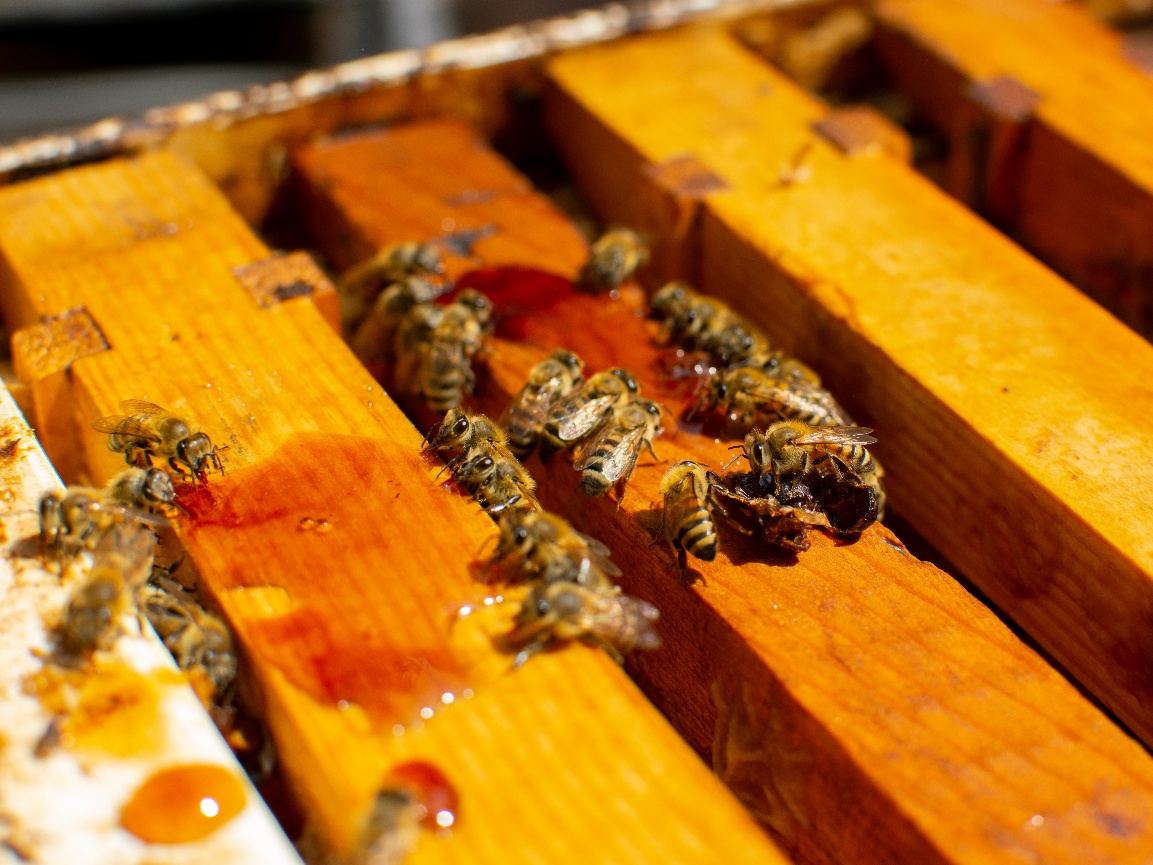
Honeybees on the top bars of a frame box in one of our partner apiaries.
The ultimate biosensor
A honeybee colony sends out thousands of foragers every day across several kilometers of land. They bring back nectar, pollen, and water, along with traces of everything the landscape holds: what is flowering, what has been sprayed, and how much water is around. The colony then integrates it all into something you can measure: data.
That makes a monitored hive a kind of permanent environmental station. A single forager sees one flower at a time; the colony pools what thousands of them bring home, and our VitalSensors read that combined signal from inside the hive. From more than 70 parameters, Bee Health Intelligence describes the colony itself: signs of disease and parasites, a missing queen, preparations to swarm, stress from robbing or predators. Honey Intelligence adds satellite data to follow the nectar flow -when it starts, when it ends, when it is time to check whether the honey is ripe, and which plants it came from.
Can a honeybee speak for the dwarf bee and the carpenter bee? Not directly: they have different physiology and limits, and we can't put our VitalSensors inside a nest hanging from a bush. But they visit the same flowers and share the same environment. Some honeybee diseases can pass to other pollinators, and the other way round (Nanetti et al., 2021), so the health of honeybees is closely linked to the health of other pollinators. On top of that, honeybees are generalists, as we said before, and visit a large share of the flowers around them. In the mountains of south-western Saudi Arabia, researchers recorded honeybees foraging on 268 plant species from 62 families (Al-Ghamdi & Al-Sagheer, 2023), a good picture of how wide their menu is in this part of the world. So, a honeybee colony's condition tells us how much food is available in the field, not only for honeybees but also for wild pollinators. That makes the honeybee the most practical biosensor for monitoring the environment.
Where the bees are, and where we listen
The map below combines two very different kinds of evidence. The red cells mark every place someone has reported a honeybee on the citizen-science platform iNaturalist (iNaturalist, 2026): 87 grid cells clustered around Dubai and Ajman, the Al Ain oasis, Abu Dhabi, and the chain of mountain sites along the Hajar range. The gold hexagons are Apisense partners' apiaries, where our devices monitor honeybee colonies around the clock.
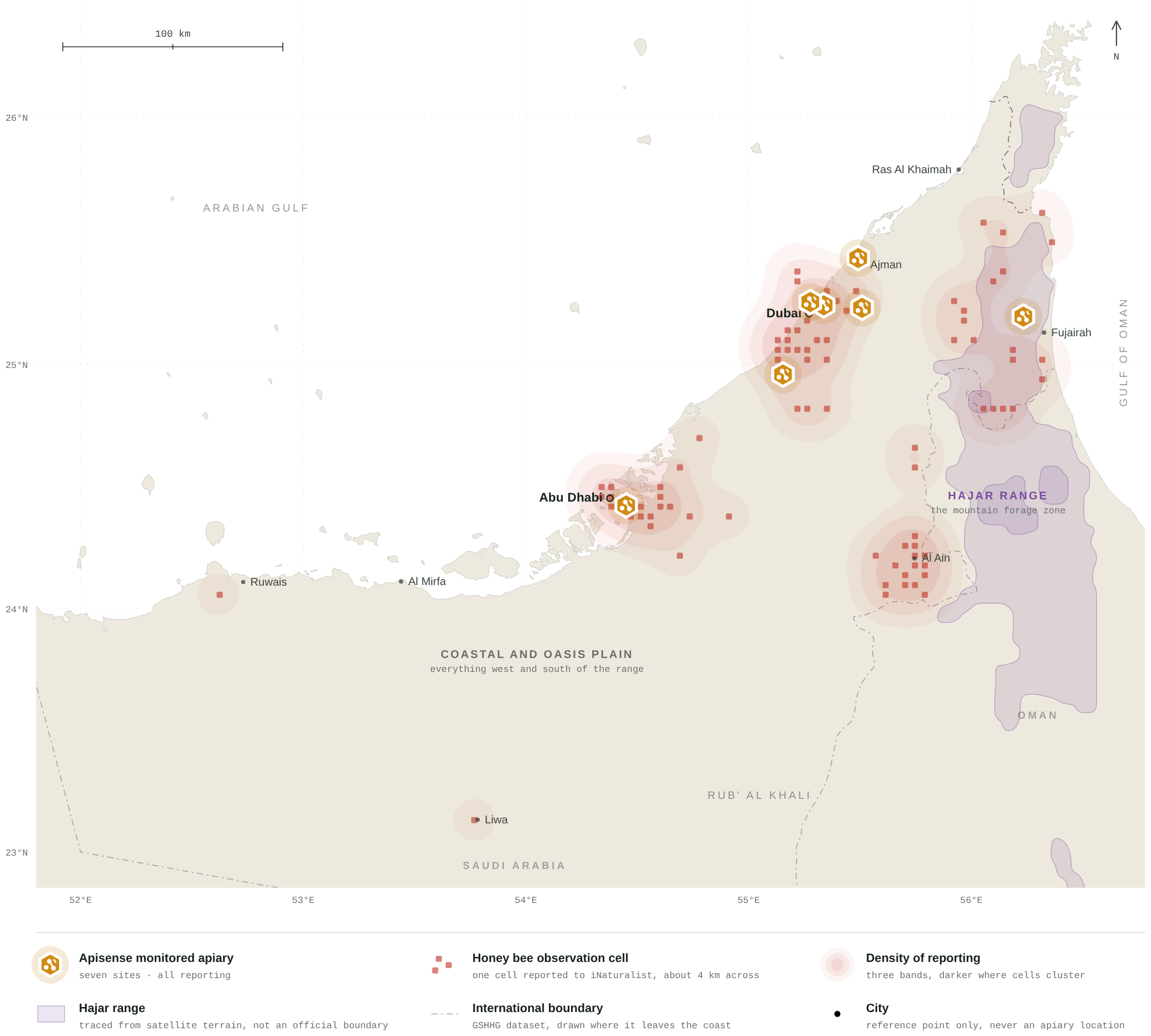
Honeybee observations reported to iNaturalist (red cells, about 4 km across) and the seven apiaries monitored by Apisense (gold). The Hajar range, the country's mountain forage zone, is shown in violet. Apiaries are shown without names or owners.
The empty west and south are worth reading carefully. They say at least as much about where people do not walk with a phone as about where bees do not fly. A citizen observation is a single moment in a single place; a VitalSensor in a hive is a continuous record. Neither replaces the other, but together they begin to turn scattered sightings into a picture of a living landscape.
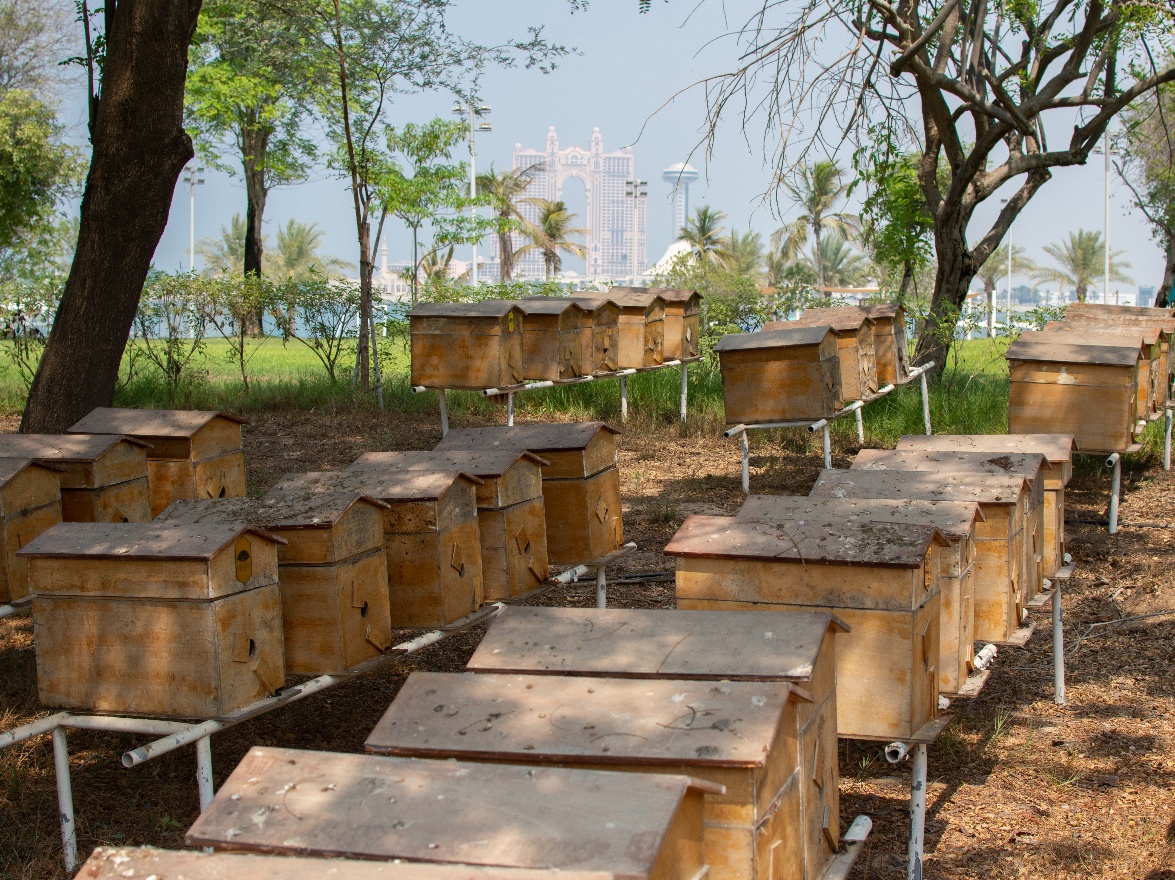
A partner apiary in the shade of trees, with the city skyline behind it. Irrigated green spaces can be valuable refuges for bees in the Emirates.
A sanctuary that listens
The Emirates are investing seriously in the living side of their landscape. ADAFSA has been breeding an Emirati line of queens since 2015 and launched its eleventh generation on World Bee Day 2026 (Abu Dhabi Media Office, 2026). Since the 2025 Sidr season, selected beekeepers have been producing honey in government forests under weekly inspection and laboratory testing (DMT & ADAFSA, 2025). Mangroves are protected along both coasts, and the ghaf, the national tree, is planted across the country.
The condition of the honeybees is one of the best indicators of these efforts. They pollinate the forests, gardens and farms, sustain the many animals that live alongside them, produce the honey that carries the region's identity and, if we choose to listen, report continuously on behalf of the ecosystem. With continuous monitoring, we can finally hear it clearly, and by understanding the complexity of honeybee colonies, we begin to understand the biodiversity challenges that lie ahead, here and in other environments around the globe.
Sources
- Abu Dhabi Media Office. (2026, 20 May). On World Bee Day 2026, Abu Dhabi Agriculture and Food Safety Authority (ADAFSA) launches 11th generation of Emirati queen bees. https://www.mediaoffice.abudhabi/en/economy/on-world-bee-day-2026-abu-dhabi-agriculture-and-food-safety-authority-adafsa-launches-11th-generation-of-emirati-queen-bees/
- Al Etihad. (2025, May). Meet the Emirati beekeeper whose hives produce UAE's most prized honey. https://en.aletihad.ae/news/uae/4575950/meet-the-emirati-beekeeper-whose-hives-produce-uae-s-most-pr
- Alattal, Y. (2024). Adaptation of Apis mellifera jemenitica (Hymenoptera: Apidae) to high temperatures: Morphological, behavioural, and physiological aspects. European Journal of Entomology, 121, 173, 181. https://doi.org/10.14411/eje.2024.018
- Al-Ghamdi, A. A., & Al-Sagheer, N. A. (2023). Plant species as potential forage for honey bees in the Al-Baha mountain region in southwestern Saudi Arabia. Plants, 12(6), 1402. https://doi.org/10.3390/plants12061402
- Beekeepers Foundation UAE. (n.d.). Beekeeping in the UAE. https://www.beekeepersfoundation.ae/beekeeping-in-the-uae/
- Chappell, M. A. (1982). Temperature regulation of carpenter bees (Xylocopa californica) foraging in the Colorado Desert of southern California. Physiological Zoology, 55(3), 267�280. https://doi.org/10.1086/physzool.55.3.30157890
- DMT & ADAFSA. Department of Municipalities and Transport and Abu Dhabi Agriculture and Food Safety Authority. (2025, 29 October). Controlled honey production in government forests [press release]. https://www.dmt.gov.ae/Media-Centre/News/DMT-Abu-Dhabi-Agriculture-and-Food-Safety-Authority-Launch
- Fadel, M. (2026, 4 October). From mountain caves to honey hives: Emirati beekeeper keeps a centuries-old tradition alive. Emirates 24|7. https://www.emirates247.com/uae/from-mountain-caves-to-honey-hives-emirati-beekeeper-keeps-a-centuries-old-tradition-alive/6334
- Fujairah Research Centre. (n.d.). Unlocking the secrets of UAE honey: The role of local flora in quality, flavor, and sustainability. https://www.frc.ae/blog_content/195/
- Harrison, J. F., Chen, J., Glass, J. R., Ozturk, C., Smith, B. H., Fewell, J. H., DeGrandi-Hoffman, G., Kang, Y., Sorensen, B., Rothweil, D., DesJardins, N. S., & Fisher, A. (2026). Limits and mechanisms of honey bee colonial thermoregulation in the heat. Journal of Experimental Biology, 229(14), jeb252357. https://doi.org/10.1242/jeb.252357
- Hung, K.-L. J., Kingston, J. M., Albrecht, M., Holway, D. A., & Kohn, J. R. (2018). The worldwide importance of honey bees as pollinators in natural habitats. Proceedings of the Royal Society B, 285(1870), 20172140. https://doi.org/10.1098/rspb.2017.2140
- iNaturalist. (2026). Research-grade observations of Apis mellifera in the United Arab Emirates. Accessed October 2026. https://www.inaturalist.org
- Mokhtar, F. A., Elhawary, S. S., Fakhry, A. M., Almoalla, A. A., Alyammahi, K. M., Belaid, Y., Abdelazim, K., Zabady, A. H., Yassin, H. A., � El-Keblawy, A. (2025). Ecological, apicultural, and therapeutic value of Vachellia tortilis and Ziziphus spina-christi honeys in the United Arab Emirates: A model for sustainable use in arid ecosystems. Foods, 14(16), 2859. https://doi.org/10.3390/foods14162859
- Nanetti, A., Bortolotti, L., & Cilia, G. (2021). Pathogens spillover from honey bees to other arthropods. Pathogens, 10(8), 1044. https://doi.org/10.3390/pathogens10081044
- National Geographic Arabia. (n.d.). The secrets of Emirati honey [in Arabic]. https://ngalarabiya.com/article/4255434/
- Nichols, K., Khan, K. A., Shepherd, T., Ghramh, H. A., & Rangel, J. (2024). Haplotype diversity and Varroa destructor infestation patterns in commercial beekeeping operations across southwestern Saudi Arabia. Apidologie, 55, 69. https://doi.org/10.1007/s13592-024-01105-4
- Sankar, A. (2023, 31 December). Emirati beekeepers on climate change, imported bees and falling honey yields. The National. https://www.thenationalnews.com/uae/2023/12/31/emirati-beekeepers-on-climate-change-imported-bees-and-falling-honey-yields/
- WAM � Emirates News Agency. (2026). UAE beekeepers win 29 prestigious awards at PIHA 2026. https://www.wam.ae/en/article/bzgq9xe-uae-beekeepers-win-prestigious-awards-piha-2026
- Whitcombe, R. P. (1984). The Bedouin bee. Saudi Aramco World, 35(2), 34�40. https://archive.aramcoworld.com/issue/198402/the.bedouin.bee.htm